Find Black Motorcycle Chain for Sport Bikes, Scooters, and Off-Road
Source a black motorcycle chain from 30 verified listings featuring roller and conveyor types. Buyers can compare specifications like chain size, tensile strength, and surface treatments including oil blooming and electroplating for transmission applications.
Key considerations
Products List




Comprehensive Sourcing Guide
Black Motorcycle Chain Sourcing Guide
Sourcing black motorcycle chains requires a disciplined approach to balancing aesthetic preferences with the rigorous mechanical demands of power transmission. In the B2B procurement landscape, these components are not merely cosmetic upgrades but critical drivetrain elements that must withstand high tensile loads, friction, and environmental exposure. Buyers must navigate a market where "black" can refer to various surface treatments, from standard oil blooming to specialized electroplating or gold coating processes that may be mislabeled or inconsistently applied. Understanding the distinction between standard industrial chains and those marketed specifically for sport bikes or high-performance applications is the first step in defining accurate procurement requirements.
The procurement strategy must account for the wide variance in product attributes observed across listings, including chain sizes, material compositions, and packaging standards. While some suppliers offer customizable colors and OEM services, others provide standardized models with fixed specifications. Buyers need to establish clear verification protocols to ensure that the black finish does not compromise the chain’s structural integrity or lubrication properties. This guide outlines the essential technical, commercial, and quality control considerations necessary to secure a reliable supply of black motorcycle chains that meet both performance standards and aesthetic expectations.
Product Scope and Observed Listing Signals
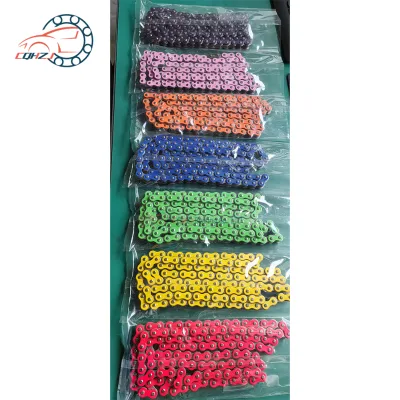
The observed product landscape for motorcycle chains reveals a diverse range of specifications, with chain sizes such as 1/2"*3/32" and 1/2"*11/128" indicating variations in pitch and roller width. Listings frequently highlight models like 420 X ring motorcycle chains and sport bike specific variants, suggesting a focus on high-performance applications. The presence of multi-colored and solid color options, including black, blue, brown, and gold, indicates that suppliers often offer aesthetic customization alongside functional specifications. Buyers should recognize that "black" may be achieved through different processes, such as oil blooming or electroplating, which have distinct implications for durability and maintenance requirements.
Structural attributes observed include roller chain designs, single-row configurations, and materials ranging from 40MN steel to alloy steel. These variations directly impact the chain’s tensile strength, which can range from 1.80kn to 3750kn depending on the model and construction. The term "Conveyor Chain" appears in some listings, which may indicate a broader product range offered by suppliers rather than a specific application for motorcycle use. Procurement teams must carefully distinguish between chains intended for industrial conveyor systems and those engineered for the dynamic loads of motorcycle transmissions, ensuring that the selected product aligns with the specific mechanical demands of the end application.
Technical Specifications to Verify
Verifying the chain size and model number is critical to ensuring compatibility with the motorcycle’s sprocket system. Common models observed include 40-1, 50-1, 60-1, 80-1, 100-1, 120-1, and various 06b-1 and 08b-1 variants, alongside specific motorcycle chain designations like 25H, 415, 420, 428, and 520. Buyers must confirm that the selected model matches the required pitch and roller diameter for their specific motorcycle application. The distinction between standard chains and special chains, as noted in some product standards, further emphasizes the need for precise model verification to avoid mismatches that could lead to premature wear or failure.
Surface treatment and material composition are equally important technical factors that influence the chain’s performance and lifespan. Processes such as oil blooming, electroplating, gold coating, and copper coating are observed, each offering different levels of corrosion resistance and friction reduction. The material, often specified as 40MN or alloy steel, determines the chain’s tensile strength and fatigue resistance. Buyers should request detailed material certificates and surface treatment specifications to ensure that the black finish is applied correctly and does not interfere with the chain’s lubrication or mechanical function. Additionally, verifying the number of rows and the specific installation requirements, such as turning installation, is essential for proper assembly and operation.
Compliance and Safety Documentation
Compliance with international standards is a key requirement for ensuring the quality and safety of motorcycle chains. Some listings reference ISO9001:2001 certification and ISO standards, which indicate a supplier’s commitment to quality management systems. Buyers should verify the current status of these certifications, as standards evolve over time, and ensure that the supplier maintains up-to-date compliance documentation. The presence of standard chain classifications, such as "Standard Chains" or "Standard Chains and Special Chains," suggests that the products may adhere to recognized industry norms, but buyers must confirm that these standards apply specifically to motorcycle chain applications.
Safety documentation should include test results for tensile strength, fatigue life, and wear resistance, although specific test data is not always provided in initial listings. Buyers should request evidence of performance testing, particularly for high-tensile strength chains ranging from 1.80kn to 3750kn, to ensure that the product can withstand the dynamic loads of motorcycle operation. Additionally, verifying the origin of the product, often listed as Zhejiang China or generally China, can provide insights into the manufacturing capabilities and quality control practices of the supplier. Buyers should also consider the loading port, such as Ningbo or Shanghai, as it may impact logistics and supply chain efficiency.
Cost Drivers and Commercial Terms
The cost of motorcycle chains is influenced by several factors, including material quality, surface treatment complexity, and order volume. Observed price ranges vary significantly, reflecting differences in product specifications and supplier pricing strategies. Buyers should consider the total cost of ownership, which includes not only the unit price but also shipping, packaging, and potential costs associated with quality issues or delays. The observed MOQ range of 1 to 2000 units suggests flexibility in order sizes, allowing buyers to start with smaller quantities for testing or scale up for larger production runs.
Commercial terms such as payment methods, delivery times, and packaging standards are critical components of the procurement agreement. Common payment terms include T/T, L/C, and Western Union, while delivery times typically range from 15 to 30 days after receiving the deposit. Packaging options, such as chain+plastic bag+neutral box+wooden case+big cart or standard sea-worthy packages, are designed to protect the product during transit. Buyers should negotiate clear terms regarding packaging standards to ensure that the chains arrive in good condition, and clarify any additional costs associated with custom packaging or expedited shipping.
Supplier Qualification and Quality Control
Supplier qualification is essential for ensuring a reliable supply of high-quality motorcycle chains. Buyers should assess the supplier’s manufacturing capabilities, including their ability to produce OEM products and customize chain colors and specifications. The observation of "Manufacture and OEM" styles indicates that many suppliers offer both standard and customized products, allowing buyers to tailor the chain to their specific needs. Verifying the supplier’s production capacity and quality control processes is crucial to ensuring consistent product quality and timely delivery.
Quality control measures should include regular inspections of raw materials, production processes, and finished products. Buyers should request information on the supplier’s quality management system, including any internal testing procedures and certification audits. The observation of "Superior quality" and "high performance durability" attributes suggests that some suppliers emphasize quality, but buyers must verify these claims through independent testing or third-party inspections. Establishing a clear quality assurance protocol, including acceptance criteria and rejection procedures, is essential for maintaining product quality and minimizing supply chain risks.
Long-Term Procurement Checks
Long-term procurement success depends on continuous monitoring of supplier performance and product quality. Buyers should establish key performance indicators (KPIs) to track delivery times, product quality, and customer satisfaction. Regular audits of the supplier’s manufacturing facilities and quality control processes can help identify potential issues before they impact production. Additionally, maintaining open communication with the supplier regarding any changes in product specifications or market conditions is essential for ensuring a stable and reliable supply chain.
As market trends and technology evolve, buyers should stay informed about new developments in motorcycle chain technology, such as improved materials or surface treatments. Regularly reviewing and updating procurement strategies to reflect these changes can help buyers maintain a competitive advantage. By focusing on long-term relationships and continuous improvement, buyers can secure a reliable supply of high-quality black motorcycle chains that meet their performance and aesthetic requirements.
FAQs
What customization options are available for black motorcycle chains?
Customization is available for these chains to meet specific buyer requirements. The products support OEM manufacturing styles and can be produced in various colors including black, silver, and gold. Buyers can request specific surface treatments like oil blooming or electroplating to achieve the desired finish.
Which chain sizes are offered for black motorcycle chain models?
The product line includes multiple standard sizes such as 1/2"*3/32" and 1/2"*11/128". Specific models like 420 X ring and sport bike chains are available in series like 40-1, 50-1, and 60-1. These sizes cover various transmission and conveyor applications for different motorcycle types.
How long is the delivery time for black motorcycle chain orders?
The standard delivery time is 15 to 30 days after receiving the deposit. This lead time applies to orders placed with manufacturers in Zhejiang, China. Buyers should note that shipping ports include Ningbo or Shanghai for international logistics.
Can black motorcycle chains be sourced with ISO certification?
Yes, ISO certification is available for these products, specifically ISO9001:2001. The chains are manufactured as standard or special chains and often come with alloy steel or 40MN material. This ensures quality compliance for international buyers requiring certified supply chains.
What packaging methods are used for shipping black motorcycle chains?
Chains are packed using standard sea-worthy methods including chain, plastic bags, neutral boxes, and wooden cases. Some orders utilize wooden cases or containers suitable for sea delivery. This packaging ensures the products remain protected during long-distance transport from China.
Which payment terms are accepted for black motorcycle chain purchases?
Accepted payment methods include T/T, L/C, and Western Union. These terms are standard for transactions involving manufacturers in Zhejiang. Buyers can negotiate specific payment schedules based on the order value and supplier requirements.